Grafika: Freepik
 2026/04/8
Społeczeństwo
2026/04/8
Społeczeństwo
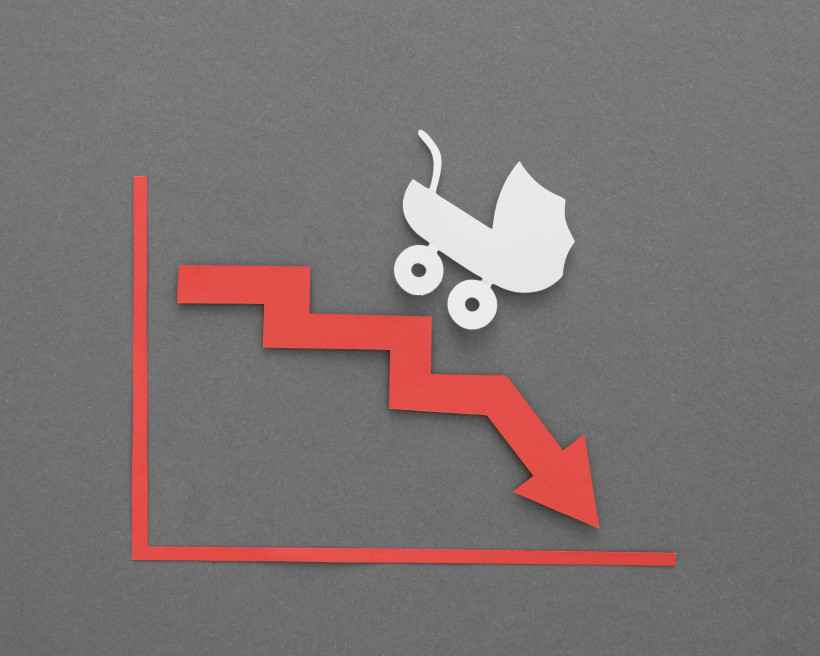
In a conversation with Maciej Szepietowski, Philip Booth discusses the fallacy of the theory of global overpopulation, the looming demographic and economic crisis, and the decline of the family as an institution—as well as ideas for strengthening the family and creating opportunities to improve Europe’s demographic situation.
For many years, there was a widespread opinion about the danger of global overpopulation and the negative consequences of numerically powerful societies. You dispute this view. Why?
There is no evidence that a rise in the global population causes economic or other problems. Back in 1970, the global population was less than four billion. Perhaps 1.6 billion people lived in dire poverty or on the edge of malnutrition. About 2.4 billion people were more or less adequately fed, housed, clothed and so on. Fifty years later, we adequately feed, house and clothe about 7.2 billion out of 8 billion people. Not only that, every meaningful indicator of wellbeing has improved – literacy, maternal mortality, health, even deaths from environmental causes such as pollution or weather events.
It is also worth noting that places which are relatively densely populated are more prosperous. There is more scope for specialisation and exchange when people live closer together.
There is, of course, a lot of misery in the world still, But that is not caused by having too many people. Wars, civil conflict, poor rule of law, lack of the right environment for business to thrive – all these things are vital if people are to prosper. The reality is that we could achieve so much more if the right conditions were in place. In this respect, things did improve in the 1980s and 1990s, but they are beginning to regress again.
Overall, the one thing we can say for sure is that the huge rise in the world population since 1970 did not have negative consequences.
You study demographic processes. You once said: "I am very pessimistic about the coming decades unless significant changes occur." What changes should occur, and are there any positive signs anywhere in Europe?
Firstly, it is important to explain why I am pessimistic. Most developed countries have huge government debts. In addition, following the Second World War, they set up social security systems that involved paying pensions and providing healthcare to older people using the taxes of the working generation. These systems work as long as you have a reasonable number of workers for every pensioner. But what happens if, like Italy, you move from having six workers per pensioner to just over two? And what happens if your labour markets are regulated to such an extent that many of those of working age cannot actually get jobs? What will happen over the next 20 years or so when you only have a little more than one active worker per pensioner in Italy? I fear for whether democracy and civil society can easily ride this out. Perhaps this is why we are already seeing so many tensions. The young believe they are paying more taxes and receiving less in terms of welfare. And they are right. Older people are not receiving higher pensions or better healthcare, it is simply that the growth in the elderly population means that the overall cost is higher.
What can be done about it? In many senses, the coming crisis cannot be averted. We may be able to muddle through with reforms to regulation so that we become more productive and empoyment rates increase. Over the next generation, however, we need to do two things as far as policy is concerned. Whilst not averting the coming crisis, it can help put things on a stable footing thereafter. The first is to move to more pre-funding through capital investment of social security systems. Poland began to follow this route in the early 1990s and then did an abrupt u-turn. Secondly, we need tax and welfare policies that support the family. These tend not to make that much difference to fertilty in practice, but they might help change culture – and they are the right thing to do.
You also mention Poland among the countries with a very negative demographic trend, predicting a population decline of a quarter. This is a significant number; how can we address this challenge?
The glib answer is „with great difficulty!”. Clearly, we need a tax and welfare system that promotes family life. Whether this will make a huge difference to the demographic trend is debatable, but it is the right thing to do in any case. Indeed, I would prefer to develop a tax and welfare system which is well designed in principle rather than one that explicitly promotes fertility. It is important that we do not discriminate against family members who want to work in the home to care for other family members in the tax system. We do not need to pay them, but the tax system should not discriminate against such families.
The work of Catherine Pakaluk suggests, in fact, that it is religious faith that drives family size. Certainly, this is a challenge for the Catholic Church which, of course, believes that marriage should be open to life. Poland is a Catholic country but it has a very low fertility rate. I do not have any simple answers. I think the revival has to come from the grass roots. Certainly, priests going into the pulpit and preaching the merits – which are considerable – of Humanae Vitae is not going to change things rapidly.
It is, of course, hard work bringing up children. This is another reason why grass rootes cultural change is important. The more parents who have more children, the easier it becomes for others to have more children. If everybody around you is having one or two children, the world is simply not set up for the family with five children.
You give an example: by 2050, approximately 60% of Italians will not have the experience of having a brother, sister, aunt, uncle, or cousin. Their parents will die, and many of them will not have children. The concept of family as an anthropological reality on which society is built will simply cease to exist in many countries. This is a very dystopian vision.
It is, indeed, a dystopian vision. But what are we to make of a situation where there will be so many only children – over half of families with children in Italy have only one child? Putting aside the financial issues, who is going to care for or provide companionship for the elderly? What happens if that only child becomes disabled and then their parents die? What happens if the child chooses to migrate – who will look after mum and dad in old age? We have had situations in Europe where huge numbers of people have died because of disease and this has caused serious problems. But this is worse. It is unchartered territory.
You are not a supporter of the pro-natalist policies pursued by some countries. What policy would be optimal in this regard?
First, I would say “do no harm”. The state should tax the family unit as a family unit and not as a set of individuals. So, families should be able to aggregate the tax-free allowances of their members. Children involve a cost, and tax should be based on ability to pay, so parents should have a tax allowance for each of their children. We can then get back to the situation where families on median incomes pay very little tax. Deliberate attempts to subsidise people to have children are not the right approach in my view – and they do not change fertility rates very much. They also expand the reach of the state, increase the tax burden, raise the cost of employing people, and so on. I favour capital-funded, private welfare systems supported by strong families, but, if we are to continue with state welfare funded by social security taxes on the working population, we could reduce social security tax rates for those with more children. We would then effectively be saying to people: “somehow the elderly have to have their welfare paid for. You can either pay social security taxes, or you can have more children who will pay social security taxes at a later date.” We could also give more votes in elections to parents with children under the age of 18. One of the flaws of one-person-one-vote democracy is that decisions can be taken that benefit the current generation at the expense of future generations. Such an amendment would, perhaps, alleviate that problem slightly.
Thank you for the interview.
 Philip Booth – Professor of Catholic Social Teaching and Public Policy at St. Mary’s University in Twickenham; Director of Research for the Catholic Bishops’ Conference of England and Wales; Research Fellow at the Centre for Entrepreneurship, Markets, and Ethics at the University of Oxford. Author of numerous works on topics including finance, social insurance, and the social teaching of the Church.
He runs the website www.catholicsocialthought.org.uk
The text is taken from the quarterly “Civitas Christiana” No. 1/2026
/mdk

Prawnik, zastępca redaktora naczelnego, prezes Zarządu Katolickiego Stowarzyszenia „Civitas Christiana”

Kontakt
ul. Wspólna 25
00-519 Warszawa
e-mail: redakcja@civitaschristiana.pl